The leg press is a popular exercise done by trainees worldwide. Like squats, the leg press effectively overloads the lower body, leading to impressive strength and muscle gains.
But what if you’re sick of the movement or don’t have access to a leg press machine?
Luckily, there are numerous equally effective movements. This article breaks down 11 fantastic leg press alternative exercises to build leg mass and strength.
Key Takeaways
- The traditional leg press is a great quad-builder. It offers a good range of motion and a solid overloading potential while being easy to learn. That said, there are numerous good alternatives – some quite similar to the leg press.
- Machine alternatives (hack squat, pendulum squat, and Smith machine squat) are the closest substitutes for the leg press exercise in terms of range of motion, overloading potential, and back support.
- You don’t need heavy weights to train the quads at home effectively. Pistol squats, sissy squats, Bulgarian split squats, and Spanish squats can load the quads through a deep range of motion using just your bodyweight, a resistance band, or lighter weights.
- Progressive overload continues to be the main driver of growth. Regardless of the leg press alternative, focus on gradually lifting more weight or doing more reps while maintaining good form.
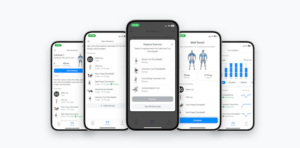
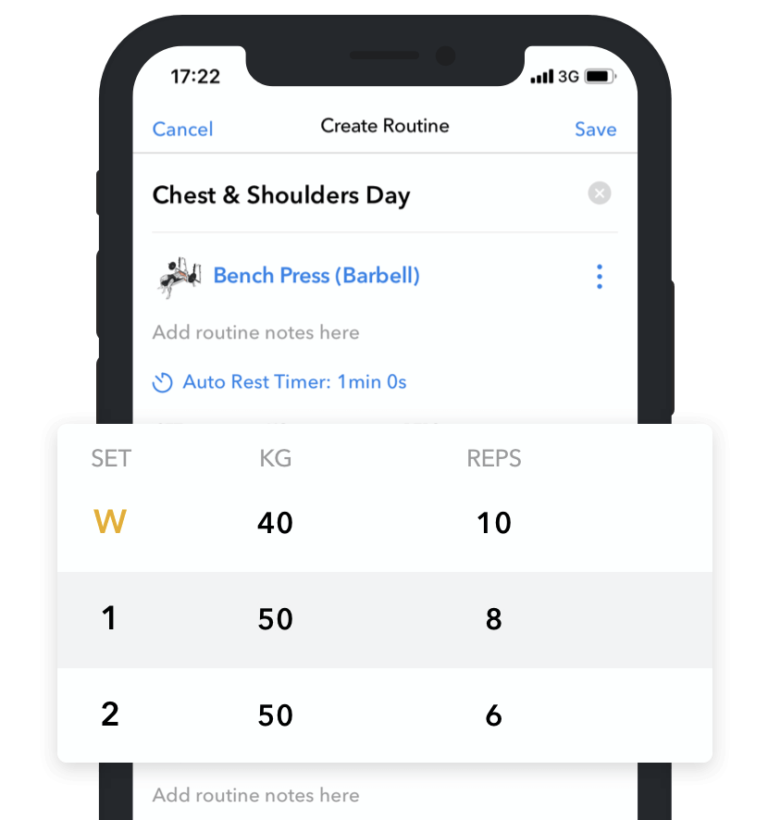
- Use Hevy to log your workouts with as many details as you want and track your performance on individual exercises. With Trainer, you can now also select your available equipment, goals, and preferences, and have the app build a complete training plan.

What is the Leg Press?
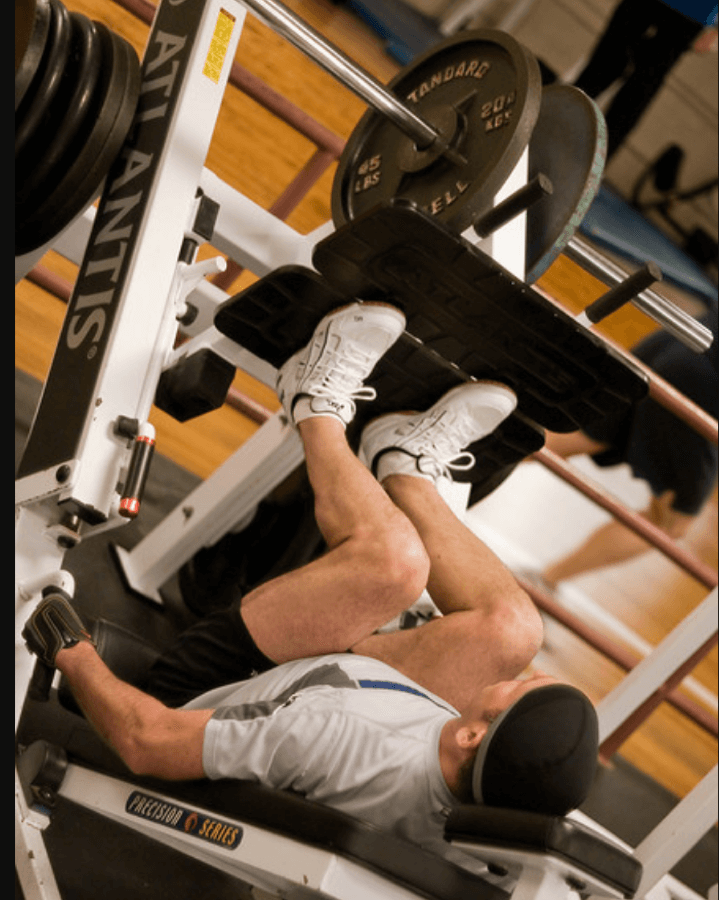
The leg press is a compound exercise that primarily targets the quadriceps and involves the knee, hip, and ankle joints (1). It’s done on a machine where trainees typically sit and press a platform away or press themselves away from a platform while on a sliding seat.
Unlike free-weight exercises such as barbell squats, the leg press doesn’t require as much stability or experience to perform optimally. You don’t need to worry about your balance, body alignment, or if the weight remains over your center of gravity. As a result, most trainees can leg press more weight than they can squat, which offers the unique benefit of more mechanical tension to support muscle growth (2).
To do a leg press, sit inside the machine, place your feet on the platform, engage your abs, and repeatedly press the platform away from you.
What Makes The Leg Press So Effective?
There are two primary types of leg press machines: the standard (angled) one, where you press the platform forward and up, and the horizontal one, where you maintain a more horizontal body position.
The leg press is a favourite exercise of many trainees for several reasons:
1. Easy to Learn
The leg press is easy to learn, especially compared to back and front squats (and similar lifts), which is why some trainees stick to it and don’t bother with free weights. It mostly comes down to selecting your preferred foot placement and getting consistent with the range of motion.
2. Good Back Support
Unlike compound exercises like the back squat, where the barbell rests behind your neck and on top of your trapezius muscle, leg presses don’t require as much spinal support because your back is positioned against a padded platform. As a result, you experience much less back stress and are less likely to aggravate an old injury.
3. Safe to Do
Every leg press machine has safety catches that allow you to rack the weight at almost any point. If you attempt to lift more weight than you can handle or take a set to failure and struggle to complete the last rep, rack the weight and escape safely.
That said, this shouldn’t be an excuse to get reckless. Slowly add weight to the leg press and never make huge jumps in the load.
4. Great Overloading Potential
As the great brofessor Dom Mazzetti once said, “Ever tried to max out a leg press? Me neither because it’s impossible. No matter how many plates you add, you are somehow able to press it. With each plate you add, the increase in difficulty decreases exponentially.”
Well said, brofessor, well said.
Jokes aside, the leg press is a fan favorite because most trainees can handle respectable weights and regularly increase the load, a key driver of long-term muscle growth. Of course, that can often lead to ego lifting, so you need to be mindful of your form, range of motion, and effort each time you increase the weight.
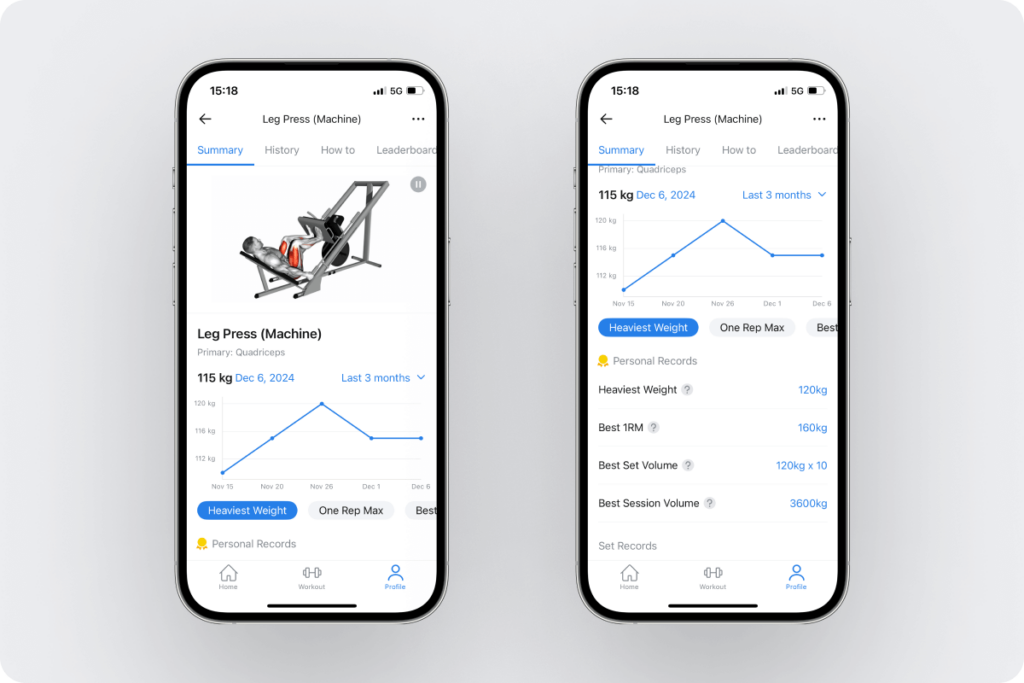
You can use Hevy to track performance metrics on every exercise you log. These include the heaviest weight you’ve lifted, the number of reps you’ve done, your best set and session volume, and your projected one-rep max. All the data is displayed on a graph, making it easier to track your progress over time.
5. Options For Intensity Techniques
The final reason trainees love the leg press is that it works excellently with intensity techniques, such as dropsets and giant sets.
For example, you can do a set with a heavy load, remove a couple of plates, do a few more reps, and repeat several times until you’ve stripped all (or most of) the weight.
Such techniques are not mandatory for effective training, but they allow lifters to do more work in less time and switch things up.
What Muscles Does the Leg Press Work?
The leg press revolves around knee extension (leg straightening) and primarily trains the quadriceps, which make up the front portion of the thighs (1, 3). Depending on foot placement and range of motion, it can also put more or less emphasis on the glutes (buttocks) and adductors (inner thigh muscles).
For instance, a wider stance with toes pointing out is more beneficial for the adductors. Placing the feet higher on the platform can also lead to better glute engagement. These foot placements take some of the focus away from the quads and put the glutes and adductors in more mechanically advantageous positions.
In contrast, a narrower stance, especially with the feet lower on the platform, shifts the focus to the quadriceps. Such a foot placement makes it so that the knees bend to a greater extent, causing the quads to work harder on each rep.
Additionally, the leg press involves the hamstrings and calves to a lesser extent, mainly to help with knee and hip stability. Your midsection (abs, obliques, and lower back) also plays a minor role in promoting stability, but it isn’t nearly as active as during squats and other free-weight exercises.
12 of the Best Leg Press Alternatives (Gym, At Home, and Outdoors)
Here are 12 top leg press alternatives using gym machines, free weights, and your own body weight. The list:
- Hack Squat (Machine)
- Smith Machine Squat
- Pendulum Squat
- Smith Machine Leg Press
- Leg Extension (Machine)
- Squat (Barbell)
- Goblet Squat
- Bulgarian Split Squat
- Assisted Pistol Squat
- Sissy Squat
- Squat (Band)
- Spanish Squat
Now, let’s take a look at each:
5 Leg Press Machine Alternatives
1. Hack Squat (Machine)
Hack squats are a fantastic alternative to the leg press. They share similar movement patterns, an identical range of motion, strong overloading potential, good back support, and a focus on knee flexion and quad activation. The hack squat is generally safe to do and easy to learn, similar to a leg press.
The primary difference is the direction of pressing. Leg presses traditionally have you push the weight horizontally or upward, whereas a hack squat is more similar to a regular barbell squat. You place the weight on your shoulders and move up and down by bending and extending your knees.
How to:
- Add the appropriate load to the hack squat machine.
- Set yourself up by positioning your back against the padded platform and your shoulders against the top pads.
- Grab the handles positioned at the sides of your head.
- Position your feet in a comfortable stance with your toes pointing slightly out. Keep your knees slightly bent.
- Retract your shoulder blades, take a deep breath, and squeeze your abs.
- Press through your heels to straighten your legs and unrack the weight with the handles.
- Take another breath and descend by bending your knees.
- Go down until your knees are at a 90-degree angle. Pause for a moment.
- Press through your heels and flex your quads to straighten your legs. Exhale near the top.
- Once finished, rack the weight and take a break.
Pro tip:
Treat the movement as you would a regular squat. Find your optimal foot position and width to ensure a strong base, and always keep your heels on the platform. One common mistake trainees make is to lift their heels off the platform and press through the balls of their feet, which creates a lot of joint stress and leads to instability.
You can find the machine hack squat, along with other leg press alternatives, and 400+ other exercises in Hevy’s exercise library. Easily find the correct movements when building workouts and create custom exercises with all the details.

2. Smith Machine Squat
Smith machine squats are an effective leg press variation. Like hack squats, they share similarities with the leg press, which makes it the ideal replacement. The range of motion, movement pattern, and overload potential are identical; both train the same lower body muscles, and neither is hard to master.
One difference between Smith machine squats and the leg press is that the former doesn’t have the same back support. Instead, you must rely on proper midsection bracing to keep your spine in a strong and stable position, similar to a regular squat.
How to:
- Set the Smith machine bar at chest height and add the appropriate weight.
- Place your hands evenly on the bar and tuck your head under, positioning your upper back against it, as in a barbell squat.
- Shuffle your feet a few inches forward to position them in front of your upper body.
- Have your feet roughly shoulder-width apart with your toes pointing slightly out.
- Retract your shoulder blades, take a deep breath, and flex your abs.
- Press through your heels to lift the Smith machine bar and rotate it slightly to unrack.
- Take another deep breath and descend until your thighs are parallel to the floor.
- Pause at the bottom for a moment and press through your heels to straighten your legs. Exhale near the top.
- Inhale again and repeat.
- Once finished, turn the bar in the opposite direction to rack it.
Pro tip:
You can keep your feet directly under the Smith machine bar and do the exercise as you would a regular barbell squat. But because of the fixed bar path, the movement can feel awkward.
Positioning your feet forward keeps your back in a healthy position and allows you to focus on the quadriceps, similar to a leg press.
3. Pendulum Squat
Pendulum squats are another good leg press alternative, offering many of the same benefits: good range of motion, stability, back support, and a fantastic overloading potential. They don’t take much time or effort to learn, but can be a fantastic way to shake up your leg training if you’re tired of leg pressing.
The pendulum squat gets its name from the arc-shaped path the carriage travels. When seen from the side, the movement of your body through the squat range of motion resembles a pendulum.
One difference worth noting is that a pendulum squat loads your body more vertically, similar to a regular squat.
How to:
- Load the machine appropriately, stand inside, and position your shoulders and trapezius against the top pads.
- Place your entire back against the padded support and position your feet on the platform – roughly at its center with your feet hip-width apart and toes pointing slightly out.
- Reach forward and grab the horizontal bar in front of you.
- Breathe in, engage your abs, and push through your heels to extend your legs and unrack the weight.
- Twist the horizontal bar to get the safety hook out of the way and descend into a squat, going as low as you comfortably can.
- Pause briefly at the bottom and push through your heels to straighten your legs. Exhale at the top.
- Breathe in on the way down and exhale as you complete each rep.
- Once finished, stand up, twist the hook back into position to hold the carriage.
Pro tip:
Similar to a leg press, play around with your foot stance to see what feels best. For most people, having the feet roughly in the middle of the platform will feel most natural, but you can also place your feet higher for less knee flexion or lower for greater knee bending and quad isolation.
4. Smith Machine Leg Press
A Smith machine leg press is an okay alternative if you want to try a new movement or if your gym has a Smith machine but lacks a leg press.
Unlike a regular leg press, where you sit inside a machine and press a platform away, the Smith machine leg press requires you to lie on the floor, raise your feet toward the ceiling, and place them against the Smith machine bar.
The problem is that this setup is a bit awkward, and some trainees have reported feeling some lower back strain from being in this position. Plus, pressing a heavy weight by having your mid-foot directly against a metal bar is not exactly comfortable or 100% safe.
There are leg press attachments designed for Smith machines. These attach to the Smith machine bar and provide greater surface area for safer, more comfortable pressing. The problem is that it’s more likely that your gym has an actual leg press machine rather than such an attachment.
Nevertheless, if you do want to try this variation, start with an empty bar and ask someone to spot you while you’re first learning the exercise. Also, check the pro tip after the how-to instructions.
How to:
- Set the Smith machine bar a few inches below hip height.
- Place an exercise mat on the floor and lie down.
- Raise your legs toward the ceiling and place the middle of your feet against the bar. Your feet should be roughly shoulder-width apart with your knees bent.
- Engage your abs, grab the bar with both hands, and carefully unrack it while supporting it with your feet.
- Inhale and slowly extend your legs while keeping your back in contact with the exercise mat. Exhale as you extend your legs.
- Slowly lower the bar as you breathe in. Bend your knees until they are almost in contact with your chest.
- Press again and exhale.
- Once finished, lower the bar to the starting position, then reach up, grab it, and rotate to rack it.
Pro tip:
Pay attention to the bar’s range of motion during the exercise and set the safety pins below that level. That way, the bar will never fall on you, even if you lose your footing or get too tired to complete the last repetition.
5. Leg Extension (Machine)
Leg extensions are not exactly a leg press substitute because they only target the quads and involve the knees, whereas a leg press is a multi-joint lift. That said, this is still a good alternative because of its strong overloading potential, the knee’s range of motion, and the movement’s overall safety.
Despite being an isolation exercise, the leg extension can be loaded and progressed on much better than isolation exercises like the bicep curl and lateral raise. The reason is that the quads are a large, four-headed muscle with excellent potential for force production, allowing you to progress more quickly, even weekly. Stronger trainees can often rep 200+ lbs with good form.
In addition, the two exercises develop the quadriceps without putting any stress on the back.
How to:
- Select the appropriate weight on the machine.
- Set the back support for your knees to be just over the edge of the seat when you sit down.
- Set the bottom pad to be positioned against your lower shins when you’re seated.
- Sit down, position your back against the pad, and place the bottom pad against your lower shins.
- Grab the handles to your sides for stability, retract your shoulder blades, and take a deep breath.
- Flex your quadriceps to extend your legs against the resistance, pausing at the top position for a moment and exhaling.
- Slowly bend your knees, keeping the weight off the stack to maintain tension in your quadriceps, and breathe in as you do. Repeat.
- Once finished, lower the weight to its stack and take a break.
Pro tip:
Try sitting a couple of inches forward and leaning slightly back, only having your upper back against the pad. This can help provide a slightly better stretch to the rectus femoris head, the only quad portion that crosses the hip and knee joints.

Leg Press Without a Machine (Dumbbells, Barbell, and More)
6. Squat (Barbell)
The barbell squat is a common and effective leg press alternative. Similar to a leg press, a proper squat targets, overloads, and develops the quads through knee extension. Both movements have identical ranges of motion and a good overloading potential.
That said, unlike the machine leg press alternatives discussed above, a barbell squat:
- Is harder to learn and do correctly
- Requires ongoing effort to maintain stability and a proper body position
- Can put more stress on the back and may not be suitable for everyone
- Takes more planning as to when and how to increase the load safely
A barbell squat is a full-body movement. While it primarily targets the quads, it also involves the hamstrings, glutes, midsection (core), upper back, shoulders, and arms to a much greater degree than a leg press (4).
How to:
- Set the barbell at collarbone height.
- Grab the bar evenly, with your hands slightly more than shoulder-width apart.
- Tuck your head underneath and position your trapezius muscle against the barbell.
- Retract your shoulder blades, engage your midsection, and keep your feet a few inches apart, heels on the floor. Your knees should be slightly bent.
- Inhale and straighten your legs to unrack the barbell.
- Take a couple of careful steps back to clear enough room and position your feet roughly shoulder-width apart.
- While maintaining a rigid body position, breathe in and descend into a squat.
- Move down until your thighs are parallel to the floor.
- Pause for a moment and press through your heels to bring yourself to the top as you exhale.
- Once finished, rack the barbell carefully.
Pro tip:
Imagine that you’re trying to sit on an invisible chair during squats. Doing so will make it easier to keep the barbell over your center of gravity and your heels glued to the ground.
Related article: Best Leg Workout and Exercises for a Strong Lower Body
7. Goblet Squat
Goblet squats are a good leg press alternative because you must maintain a more upright torso while holding the weight in front of your chest, over your center of gravity. Doing so keeps the emphasis on the quads and knees (5). The range of motion is also similar, and you can work up to a respectable weight.
Perhaps the biggest benefit of the goblet squat is its accessibility. All you need is a dumbbell or kettlebell and a bit of space – perfect if you work out at home or in a busy gym.
That said, a couple of things worth pointing out are:
- Goblet squats don’t have the same overloading potential as the previous alternatives discussed
- Given the fact that you must hold the weight in front of your chest, your upper back, biceps, or shoulders may fatigue before your quads do
How to:
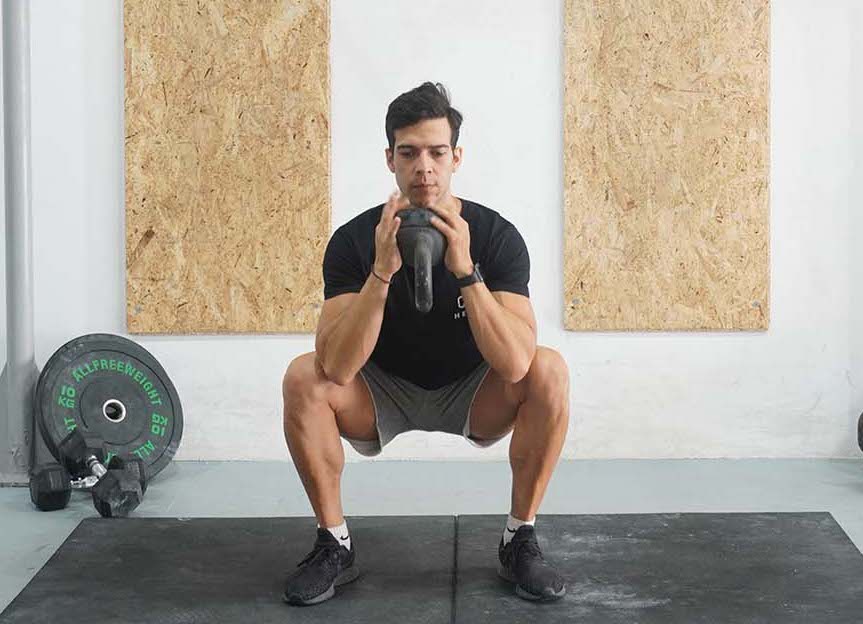
- Grab a dumbbell and lift it in front of your chest. Hold the dumbbell vertically with your palms against the top weight plate, and your fingers squeezing the plate for extra support.
- Have your feet in a comfortable stance with your toes pointing slightly out.
- Retract your shoulder blades, take a deep breath, and squeeze your abs.
- Descend into a squat until your thighs are parallel to the floor.
- Pause for a moment and press through your heels to bring yourself to the top as you exhale.
- Breathe in on the way down and repeat.
Pro tip:
Squeeze the weight hard. This will help create upper body stability and tension, making it easier to support an increasingly heavier weight and not let it be as much of a limiting factor.
8. Bulgarian Split Squat
Next to a barbell squat, the Bulgarian split squat is perhaps the best free-weight alternative to the leg press. It has a fantastic range of motion; it can put more emphasis on the quads or glutes, depending on stride length, and you can overload and exhaust the quads with far less weight.
Plus, a Bulgarian split squat targets the same muscles as a leg press, mainly working the quads, but also involving the hamstrings and glutes for hip stability and extension (6).
One advantage over a movement like the goblet squat is that you train one leg at a time, which means each quad works independently. As an added benefit, working each side independently leads to a more even development and reduces the risk of muscle imbalances.
That said, Bulgarian split squats are difficult to master, mainly because it takes some time to develop the balance needed.
How to:
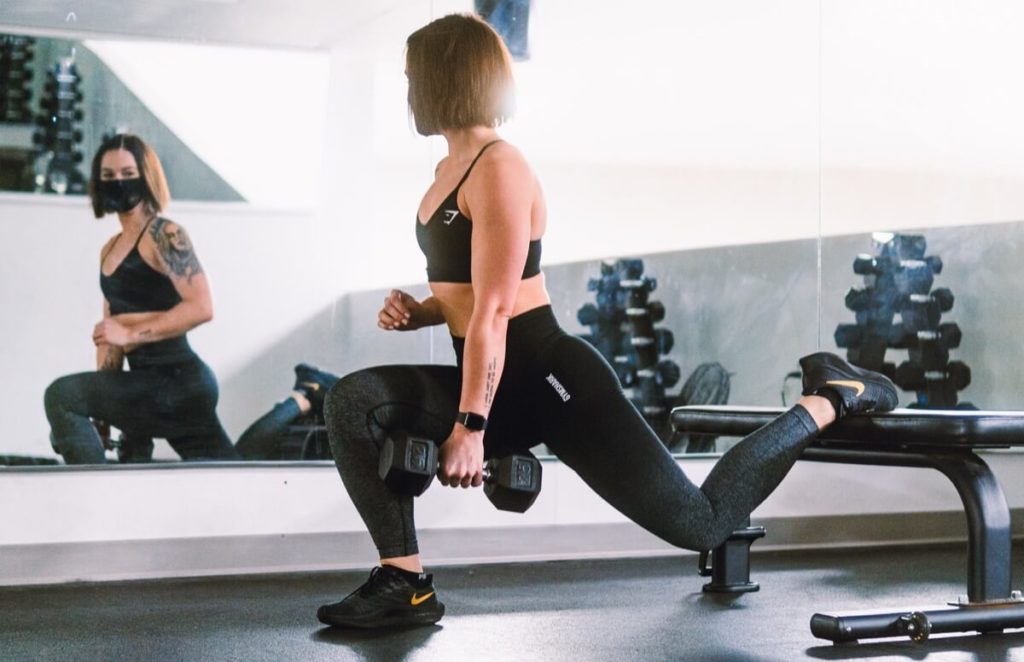
- Stand tall, extend one leg back, and place the foot on an elevated object, such as a gym bench, plyo box, or chair.
- Plant your front foot flat on the ground. Have your arms to your sides for balance.
- Retract your shoulder blades, take a deep breath, and engage your abs.
- Bend your front knee to descend into a split squat.
- Move down until your front thigh is almost parallel to the floor and your back knee is close to the ground.
- Press through your heel to straighten your front leg and move to the starting position as you exhale.
- Inhale as you descend into the next rep.
- Once finished training one side, switch leg positions and do the same number of reps.
Pro tip:
Do the bodyweight version to master proper form and improve your stability. Introduce weights, such as a pair of dumbbells or weight plates, once your form improves and you can easily do at least 15 controlled bodyweight reps per leg.
Related article: Best Home Workout for Men: 8 Recommendations for All Levels
Leg Press Alternatives at Home (Bodyweight)
9. Assisted Pistol Squat
The assisted pistol squat is an advanced at-home leg press alternative that primarily targets the quadriceps while also engaging the hamstrings, glutes, and midsection. Like Bulgarian split squats, the movement trains one leg at a time, which helps prevent side-to-side muscle imbalances.
To do these, you must hold onto something sturdy, such as a door frame, hence the “assisted.” You can also do these unassisted (i.e., not holding onto anything), but the stability requirements are much higher.
A key benefit of this movement is that it’s easier to achieve a deeper range of motion because nothing external limits your depth: no machine, seat, or sled angle. This means the knee can go through most of its range of motion, assuming you have the quad strength to support it, and train the quads quite well.
How to:
- Stand next to a sturdy object you can hold onto for balance.
- Retract your shoulder blades, engage your abs, and take a breath.
- Lift your left foot off the floor and keep your right foot flat on the ground.
- Descend into a squat by bending your right knee and extending your left leg forward.
- Go down until your right thigh is roughly parallel to the floor, and press through the heel to straighten your leg. Exhale near the top.
- Once finished training the right leg, plant your left foot on the floor, lift the opposite one in the air, and do the same number of reps.
Pro tip:
Pistol squats rely on good ankle mobility because your knee will be in front of your foot at the bottom. Take extra time to warm up your ankles through mobility exercises, such as static stretches, to boost your performance. Here’s one example:
- Stand against a wall and have the toes of one foot several inches away from the wall.
- Lean on the leg and drive the knee forward as much as possible while keeping the heel flat.
- Hold for up to 60 seconds and repeat for your opposite ankle.
10. Sissy Squat
Sissy squats are another great leg press alternative to do at home. The goal is to lift your heels off the ground on the way down, allowing you to fully bend your knees and bring them in front of your toes. At the same time, you need to minimize any hip movement, which essentially isolates the quads.
Most people do sissy squats supported (i.e., holding onto something for balance) because, even if you have the quad strength for full reps, it can be hard to maintain your balance on the way down.
One benefit of the sissy squat is that it may better target the rectus femoris, the only quad head that crosses both the knee and hip joints, compared to other squat variations. The reason is that it stretches that portion of the quads more effectively at the bottom position, which may help develop it better.
How to:
- Hold onto something for support – for example, a door frame.
- Have your feet in a comfortable stance; start with a narrow stance and gradually widen it until you find what feels good.
- Squeeze your glutes, engage your abs, and breathe in.
- Begin by bending your knees and simultaneously pushing them forward as you lift your heels off the ground. Keep your hips in a stable position.
- Descend to a comfortable position – ideally to full knee flexion. (Feel free to start with a shorter range of motion to see how it feels on your knees.)
- Pause briefly at the bottom position and push through the balls of your feet to extend your knees, slowly bringing your heels to the ground. Exhale near the top.
- Breathe in on the way down and repeat.
Pro tip:
This is more of a recommendation rather than a pro tip, but if you’re afraid of getting injured with sissy squats, check out this video by FitnessFAQs. And, of course, practice common sense and take your time with the progression.
Resistance Band Exercise Alternatives to The Leg Press
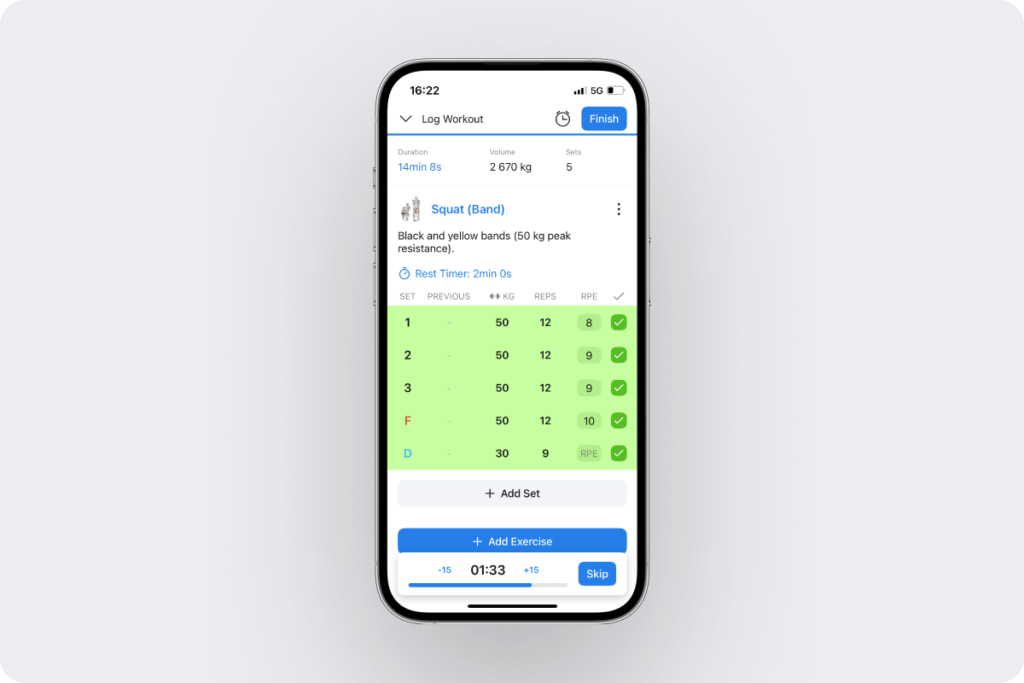
11. Squat (Band)
Band squats are a beginner-friendly leg press alternative that’s particularly useful if you work out at home or on the road. They are cheap, compact, and light enough to take on the road. One advantage is that you can gradually increase the resistance by using thicker bands or combining two or more thinner ones.
That said, one tradeoff is that a band won’t offer as much resistance at the bottom position, which means the quadriceps don’t get stronger through that portion of the range of motion. The resistance gradually increases as the band lengthens, peaking at the top of each rep.
You can use an open-ended band and hold the handles at your sides, or wrap a looped band over your shoulders and step over it. The latter option tends to work better if you want to use more resistance since you don’t rely on your arms and shoulders to keep the band in position.
How to:

- Take a looped resistance band and step over it. Use the same stance you would for other squat variations: feet roughly shoulder-width apart with your toes pointing slightly out.
- Grab the opposite end of the resistance band, stretch it, and place it behind your head, resting on top of your traps/upper back. The band should be fairly stretched at that point.
- Hold the resistance band with both hands, retract your shoulder blades, and engage your abs.
- Inhale and descend into a squat while keeping your heels on the ground.
- Move down until your thighs are parallel to the floor, and press through your heels to bring yourself to the top. Exhale.
Pro tip:
Another way to perform the exercise is to step over a band and loop it over your shoulders. The position is similar to a front squat and requires you to maintain a more upright posture.
12. Spanish Squat
The Spanish squat is a lesser-known leg press alternative you can do with a thick, looped band. One advantage of the exercise is that it limits forward knee movement, making it a good option for quad training for people who get knee pain from regular squats or leg presses.
To perform these, you must wrap a heavy-duty looped band over a sturdy object, such as a squat rack, and loop the other end behind your knees. The band will keep you in a stable position as you squat while keeping your knees over your ankles.
With more vertical shins, Spanish squats train the quads without putting as much strain on the knees.
Physiotherapists often recommend the Spanish squat to trainees recovering from patellar tendon issues. The movement is also helpful for people with general anterior knee pain (in the front, around the kneecap) during other quad exercises.
How to:
- Take a thick looped resistance band and tie it to a sturdy object, such as a squat rack beam. The band should be at roughly knee height.
- Step inside the resistance band and position it against the back of your knees.
- Take a few steps back to stretch the resistance band, allowing it to keep you in position.
- Have your feet shoulder-width apart with your toes pointing slightly out, retract your shoulder blades, and engage your abs.
- Breathe in and descend into a squat.
- Keep your weight on your heels and descend until your thighs are parallel to the floor. Your ankles, knees, and hips should be at 90° angles.
- Pause at the bottom for a moment and press through your heels to move back to the top as you exhale.
Pro tip:
Unlike other squat variations, there shouldn’t be any movement at the hips that causes a forward torso lean. Imagine that your back is against an invisible wall. The objective is for your torso to move up and down in a straight line. You can lift your arms forward for balance.
FAQs
1. Can I train my legs without the leg press?
There are plenty of alternatives to the leg press machine. You can always find creative ways to train your quadriceps, hamstrings, and glutes, regardless of the equipment you have available.
2. How do I do a leg press without a machine?
You need a machine to perform the leg press, but some alternatives offer similar benefits. For example, you can leg press on a Smith machine by lying on the floor and pressing the bar toward the ceiling. Similar movement patterns to the leg press include machine hack squats, Smith machine squats, Spanish squats, and goblet squats.
3. Can I replace the leg press with deadlifts?
Deadlifts are not the best leg press replacement because they are a compound exercise that revolves around hip extension more than knee extension. This means the focus is more on the posterior chain: glutes, hamstrings, and back (7).
4. Can I do a leg press at home?
No, unless you have a leg press machine at home. Still, you can do fun, effective alternatives, including band squats, sissy squats, Spanish squats, assisted pistol squats, and Bulgarian split squats.
5. Is a single leg press a viable alternative?
The single leg press, where you press through one foot at a time, can also work, particularly if you have side-to-side imbalances. However, if that isn’t the case, it’s more time-efficient and easier to create a good overload by training both legs simultaneously.
6. Is the resistance band leg press good?
The resistance band leg press is a variation where you lie on the ground, loop a band over the middle of your feet, and hold it tightly at your sides. We don’t recommend it because it’s hard to create an overload since grip tends to be more limiting than your quad strength and the band may slip and hit you.
Final Thoughts
The leg press is popular because it strengthens the lower body, provides excellent back support, and is relatively easy to learn. Still, there are plenty of leg press alternatives to strengthen and develop your quadriceps if you’re sick of the movement or don’t have access to that machine.
Some of the above movements are more similar to leg presses than others, but each offers unique benefits and deserves consideration.
Download the Hevy app to access a rich exercise library with 400+ entries (including leg press variations and the option to create custom movements). With Hevy Trainer, you can now select the equipment you have, and our digital coach will build a full program tailored to your goals and preferences.